Welcome to our comprehensive guide on choosing between a concrete driveway and pavers in Auckland! Whether you’re planning to upgrade your home’s outdoor space or building a new driveway, we’re here to help you make an informed decision that suits your style, budget, and local conditions. Explore the pros and cons, costs, maintenance tips, and design ideas to find the perfect driveway solution for your Auckland property.
Choosing between a concrete driveway and pavers is one of the biggest decisions kiwi homeowners face when upgrading their outdoor space. Both options can handle Auckland’s high rainfall and variable weather conditions, but they differ significantly in cost, appearance, and how they perform on the reactive clay soils found across many suburbs. This guide breaks down everything you need to know to make the right choice for your property and budget.
Table of Contents
Key Takeaways
- Concrete driveways are cheaper upfront (NZ$80-120/m² installed) and require minimal maintenance, making them ideal for long driveways, tight budgets, and rental properties in Auckland.
- Paver driveways cost more initially (NZ$120-200/m²) but offer superior visual appeal, easier localised repairs, and better flexibility on Auckland’s movement-prone clay soils.
- Auckland’s average 1200-1400mm annual rainfall makes drainage a critical factor permeable pavers can help meet council stormwater requirements while poured concrete typically needs drainage channels.
- Quality concrete driveways last 25-35 years; well-installed paver driveways can exceed 30-50 years with proper base preparation and ongoing joint maintenance.
- Site conditions, slope, and your tolerance for maintenance should drive your decision more than material preference alone.
Concrete vs Pavers in Auckland: Quick Answer
If you want a straightforward, cost effective driveway with minimal fuss, a concrete driveway is usually the better choice for Auckland properties. If you’re willing to invest more upfront for timeless elegance, design flexibility, and easier future repairs, pavers are worth the extra spend especially on visible front yards where curb appeal matters.
Here’s a quick snapshot:
- Upfront cost: Concrete runs NZ$80-120 per square metre installed; pavers typically cost NZ$120-200 per square metre for standard options, rising higher for natural stone or premium finishes.
- Appearance: Concrete offers clean, uniform lines with options like exposed aggregate or coloured concrete. Pavers deliver endless design possibilities with many shapes, colours, and patterns.
- Drainage: Standard concrete requires separate drainage solutions. Permeable pavers can drain naturally and satisfy Auckland Council’s stormwater management expectations.
- Maintenance: Concrete needs occasional sealing and crack monitoring. Pavers demand regular cleaning, joint sand top-ups, and weed control in shaded or damp areas.
Auckland’s high rainfall, clay-heavy soils, and seasonal ground movement mean both materials need proper base preparation to perform well. Most concrete driveways in Auckland last around 25-35 years when maintained, while quality paver driveways can exceed 30 years with routine care. Keep reading for detailed pros, cons, and real-world Auckland examples before making your decision.
Understanding Auckland Conditions for Driveways
Auckland’s climate and ground conditions affect driveway performance more than many homeowners realise. What works perfectly in dry, stable regions can crack, sink, or flood in our wet, clay-rich environment.
Auckland receives 1200-1400mm of rain annually, often delivered in intense downpours that test drainage systems. Coastal air accelerates surface degradation, while long, humid winters promote moss and algae growth on any paving material. These weather changes demand surfaces that either shed water efficiently or allow it to drain naturally through the structure.
Soil types vary significantly across the region:
- West Auckland: Often features heavy clay that expands when wet and shrinks when dry, causing ground shifts of up to 50mm seasonally.
- South Auckland: Similar clay conditions in areas like Manukau, creating challenges for rigid concrete slabs.
- North Shore: Generally more stable sandy soils, though pockets of reactive clay exist.
Auckland Council’s Unitary Plan often requires new or extended driveways to incorporate permeable surfaces typically 20-50% of the total area to manage stormwater runoff. This can influence your material choice significantly, as permeable pavers meet these requirements more easily than impermeable concrete options.
Both poured concrete and pavers can work well in Auckland if the base, drainage, and finish are chosen with these local realities in mind. The key is matching the material to your specific site conditions.
Concrete Driveways in Auckland: Pros, Cons & Best Uses
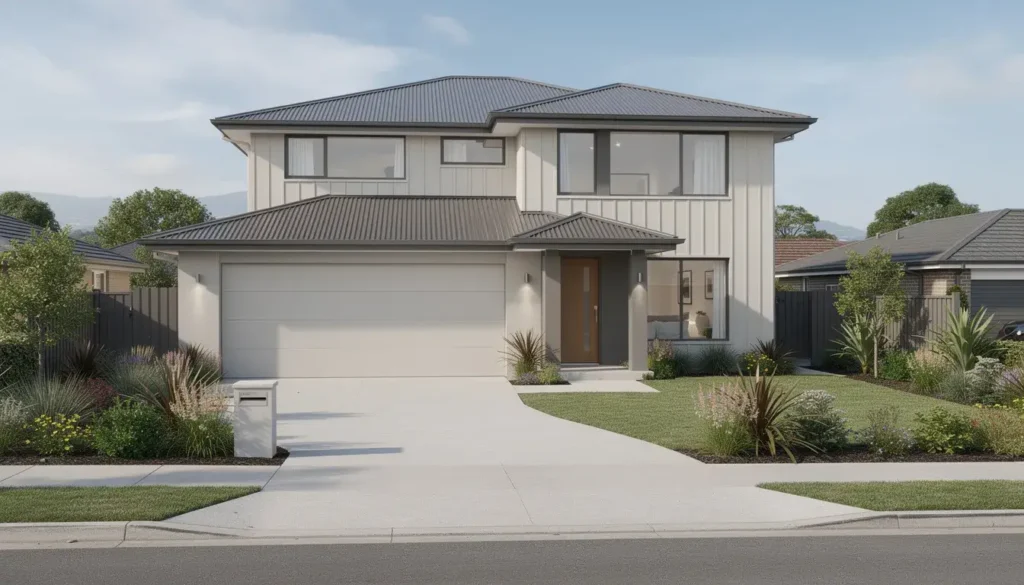
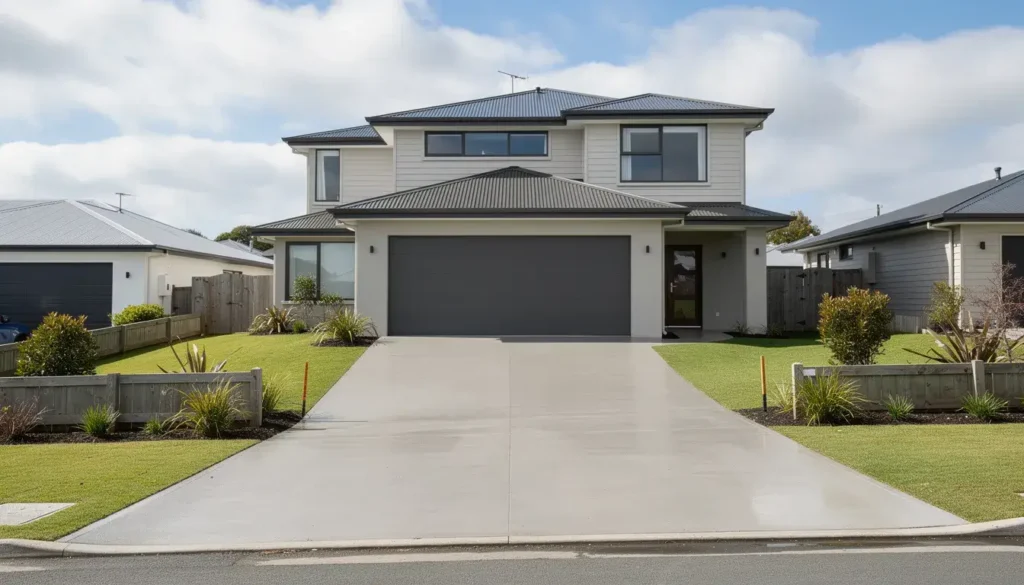
A typical Auckland concrete driveway in 2026 is a continuous slab of plain, coloured, or exposed aggregate concrete poured onto a prepared base with steel mesh reinforcement. You’ll see them across most suburban streets from standard grey finishes to textured options with decorative finishes that mimic stone.
Advantages of Concrete Driveways
- Lower upfront cost: At NZ$80-120 per square metre installed, concrete is typically 30-50% cheaper than quality pavers for straightforward Auckland sites.
- Very low maintenance: Sweep occasionally, waterblast annually, and reseal every 3-5 years. That’s essentially it for day-to-day upkeep.
- Excellent load-bearing: Concrete stands up brilliantly under heavy loads from multiple vehicles, boats, or caravans ideal for multi-car suburban households.
- Minimal weed issues: No joints means no spaces for weed growth, unlike segmented paver surfaces.
- Quick installation: A standard 50m² driveway can be excavated, poured, and finished in 2-5 days.
Drawbacks of Concrete Driveways
- Cracking risk: Auckland’s clay soils cause ground shifts that can crack rigid slabs, particularly if control joints aren’t properly spaced every 4-6 metres.
- Difficult repairs: Patch repairs often leave visible colour and texture differences. Major cracks may require full slab replacement.
- Utilitarian appearance: Standard plain concrete looks functional rather than premium, which can underwhelm on high-end properties.
- Slip hazard on slopes: Smooth-finished concrete requires textured finishes for grip on steep Auckland driveways, especially when wet.
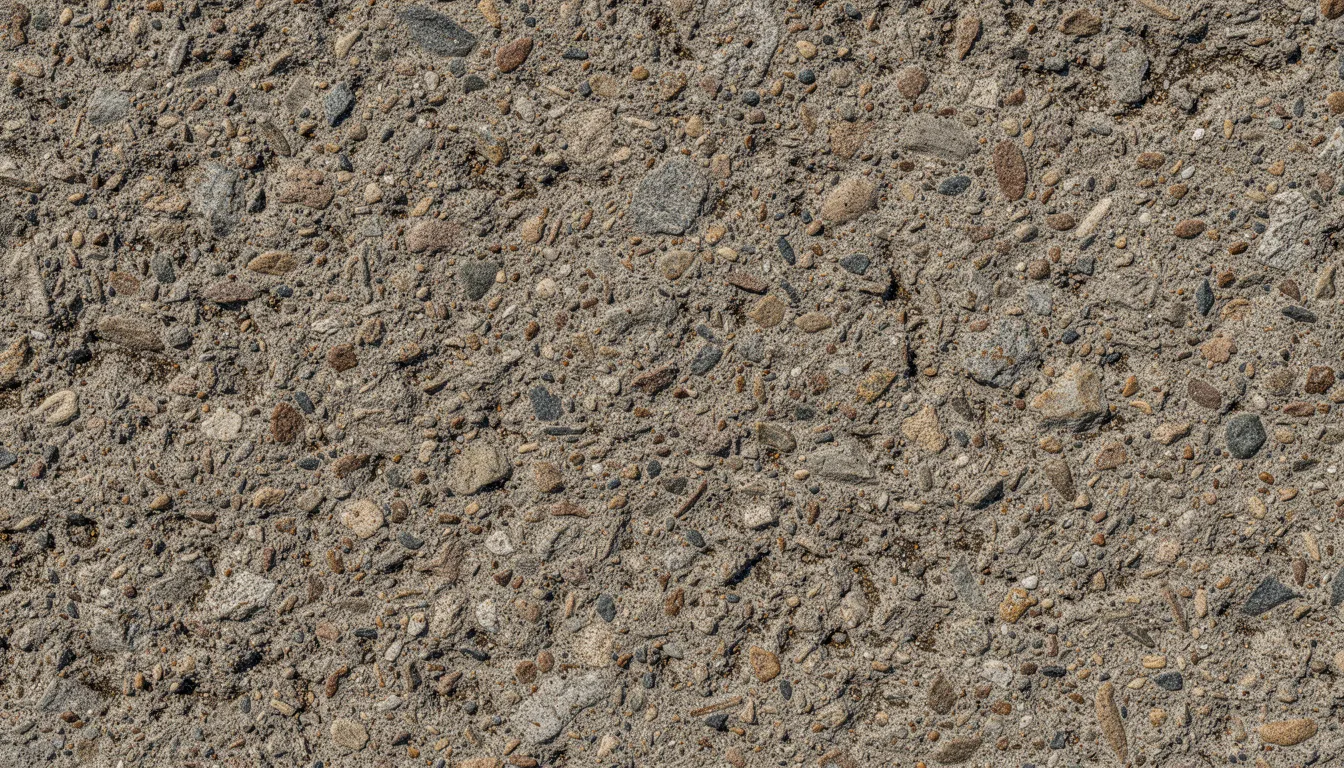
Popular concrete finishes in Auckland driveways include broom-finished plain concrete, exposed aggregate in earth tones, and aggregate or coloured concrete in shades like charcoal, terracotta, and light sandstone.
Best for: Long or steep driveways, properties with tight budgets, rental investments, or homeowners who prioritise low maintenance over premium aesthetics.
Concrete Driveway Costs & Lifespan in Auckland
Here’s what you can expect to pay for a new driveway in concrete across Auckland in 2026:
| Type | Installed Cost (per m²) | Total for 50m² |
|---|---|---|
| Plain grey concrete with mesh | NZ$80-100 | NZ$4,000-5,000 |
| Coloured or exposed aggregate | NZ$100-150 | NZ$5,000-7,500 |
| Premium decorative finishes | NZ$120-180 | NZ$6,000-9,000 |
These prices typically include excavation, base course preparation, formwork, steel mesh reinforcement, concrete supply, labour, saw-cut control joints, and basic site clean-up.
Costs push toward the higher end when:
- Access is difficult (narrow sections, steep approaches)
- Slopes require additional formwork and finishing
- Soft clay needs deeper aggregate bases (200mm+ instead of standard 100-150mm)
- Drainage upgrades are required to manage water pooling
Concrete driveways in Auckland typically last 25-35 years when properly installed and maintained. Regular sealing and prompt crack repairs can extend service life significantly. Expect light foot traffic after 24-48 hours, light vehicles after about 7 days, and full strength at around 28 days plan accordingly if you need parking access.
Concrete Driveway Maintenance & Common Issues
Concrete paving is low maintenance but not zero-maintenance. Here’s what’s involved:
Routine maintenance tasks:
- Annual or biannual cleaning to remove moss, algae, and dirt buildup
- Resealing every 3-5 years (NZ$20-40/m² professionally applied)
- Prompt treatment of oil stains before they penetrate the surface
Common Auckland issues:
- Hairline cracking from shrinkage or ground movement especially in areas prone to reactive clay
- Moss and algae buildup on shaded, damp driveways under trees or south-facing aspects
- Slight colour fading and mottling over time from UV rays and coastal air
Prevention tips:
- Ensure proper drainage falls (minimum 1:80 gradient) to prevent water pooling
- Specify non-slip textures like broom finish or exposed aggregate on slopes
- Insist on control joints spaced appropriately for your driveway length
For older, heavily cracked slabs in Auckland suburbs, professionals typically recommend full replacement rather than extensive patching once cracks exceed 10mm width or cover more than 20% of the surface area.
Paver Driveways in Auckland: Pros, Cons & Best Uses
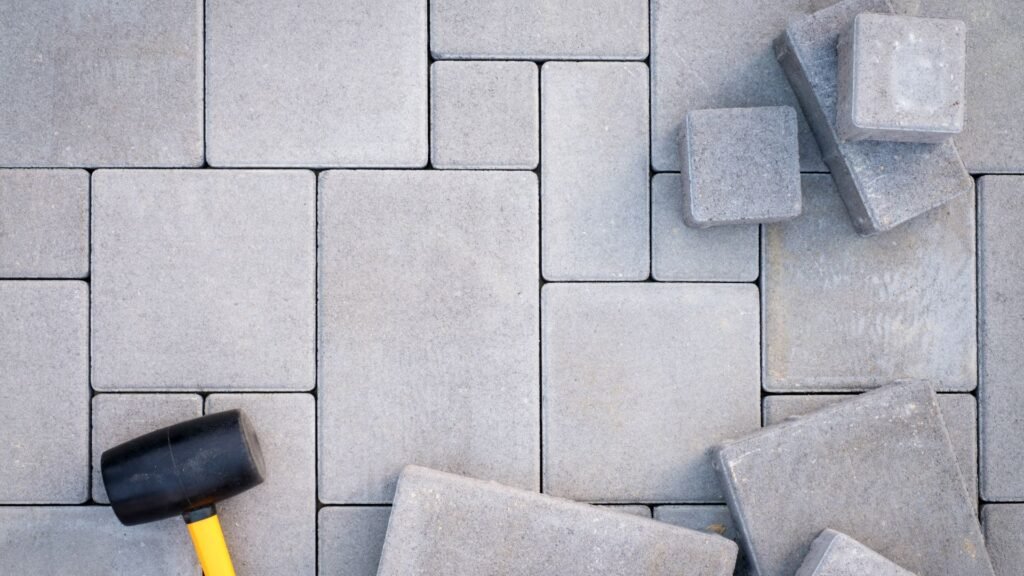
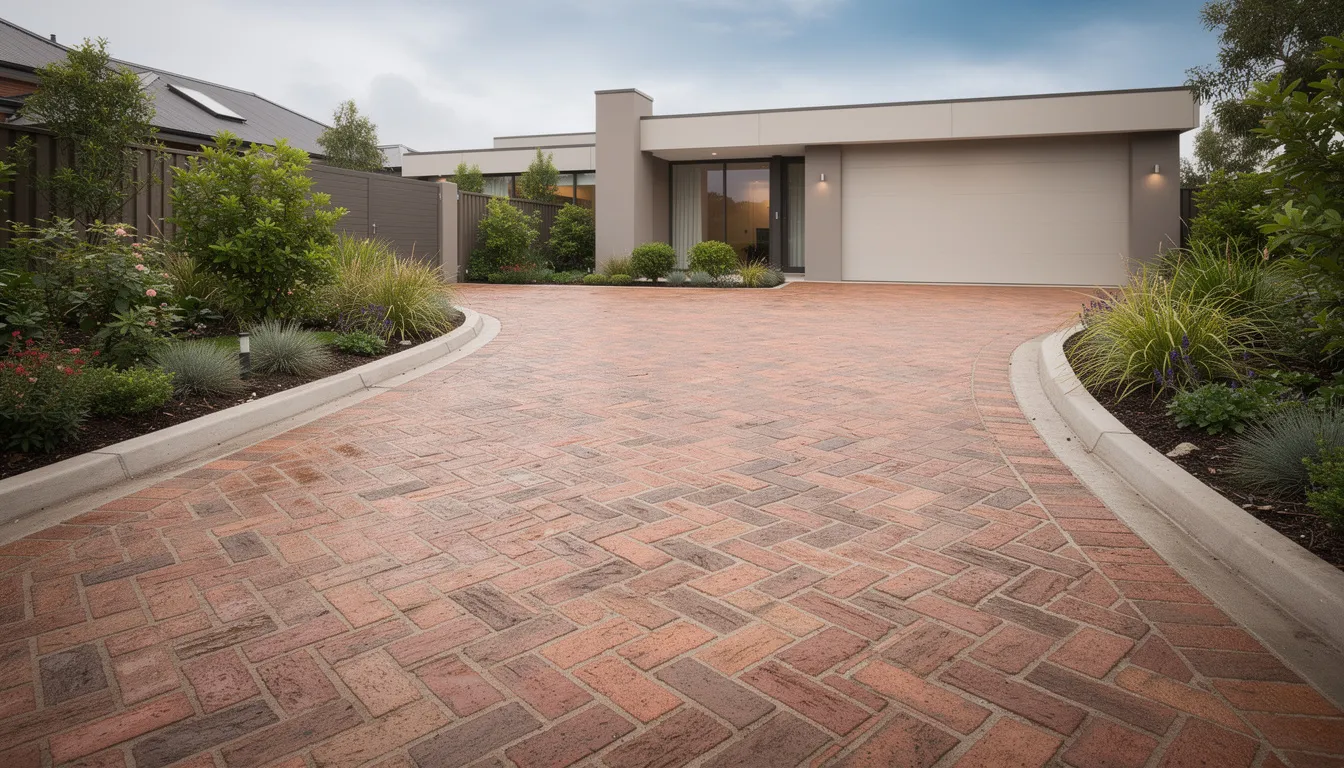
A modern Auckland paver driveway features individual units concrete blocks, clay bricks, or large-format slabs laid in patterns over a compacted aggregate base. Done well, they create a premium entrance that coordinates beautifully with garden paths, backyard patio areas, and landscaping features.
Advantages of Paver Driveways
- High-end aesthetic appeal: Pavers offer endless design possibilities with colours, laying patterns (herringbone, basketweave, stretcher bond), edging bands, and mixed materials that can match your home’s style perfectly.
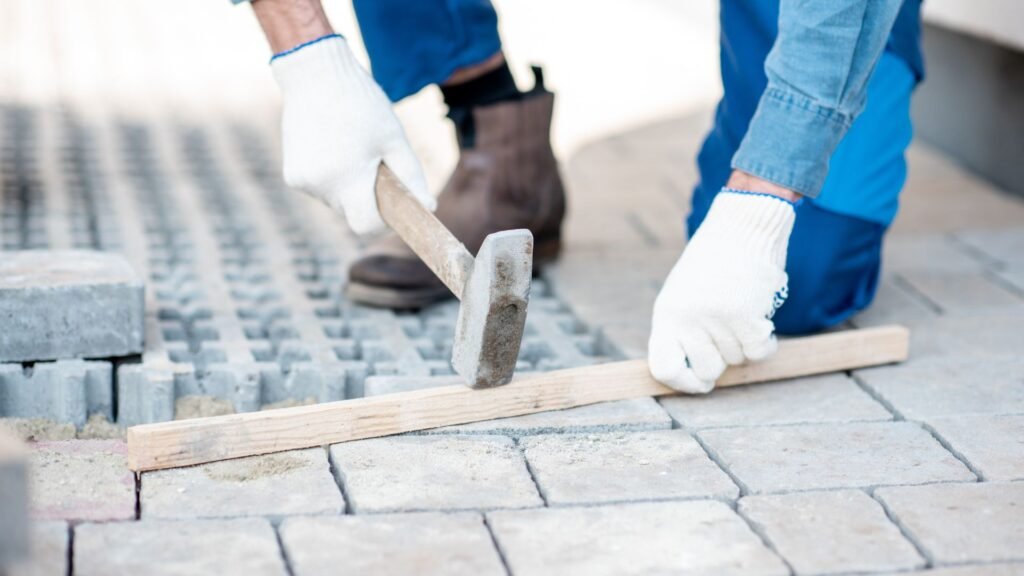
- Easy localised repairs: Individual pavers can be lifted and relevelled if a small area sinks, or removed for service access, without replacing the entire driveway.
- Better flexibility on clay: Jointed surfaces allow micro-movements of 5-10mm without visible damage, making them well-suited to Auckland’s reactive soils.
- Permeable options available: Permeable pavers with infiltration rates of 100-600 L/m²/hour help satisfy council stormwater requirements and reduce flooding risk.
- Long-term value: Quality pavers can boost property values by 5-10% according to real estate reports, particularly in premium suburbs.
Drawbacks of Paver Driveways
- Higher installation cost: Expect NZ$120-200+ per square metre significantly more than basic concrete for most Auckland properties.
- More regular maintenance: Joint sand needs replenishment, weeds require control in damp areas, and moss builds up faster than on sealed concrete.
- Base preparation is critical: Poor compaction in Auckland’s wet winters causes pavers to settle, rut, or rock under vehicle wheels.
- Slip risk on smooth units: Some pavers can be slippery when wet. Choose slip resistant textured surfaces and appropriate joint sand for slopes.
Popular paver types for Auckland driveways include concrete pavers (most common and cost effective), clay pavers (traditional look, excellent durability), large-format concrete slabs (contemporary aesthetic), and permeable pavers for eco-focused projects requiring good drainage.
Best for: Homes where street appeal matters, upmarket suburbs like the North Shore or central Auckland, curved or feature driveways, and properties prioritising permeable surfaces for stormwater compliance.
Paver Driveway Costs & Lifespan in Auckland
Here are typical 2026 installed costs for paver driveways in Auckland:
| Type | Installed Cost (per m²) | Total for 50m² |
|---|---|---|
| Standard concrete brick pavers | NZ$120-160 | NZ$6,000-8,000 |
| Large-format or premium pavers | NZ$160-220 | NZ$8,000-11,000 |
| Permeable paver systems | NZ$180-250 | NZ$9,000-12,500 |
| Natural stone pavers | NZ$200-350+ | NZ$10,000-17,500+ |
These prices typically include excavation, base course depth suitable for driveway loads (150-300mm compacted aggregate), bedding sand, pavers, cutting, edge restraints, joint sand, and compacting.
Quality paver driveways in Auckland last 30-50+ years when the base is properly built and maintained. Individual units may need occasional replacement due to staining or damage, but the overall surface stays serviceable far beyond the first 25 years often outperforming concrete in the long term benefits calculation.
Budget tip: When comparing costs, factor in whole-of-life expenses. Pavers’ higher initial spend is offset by easier, cheaper repairs over decades especially on moving clay soils where concrete options often require full replacement.
Paver Driveway Maintenance & Common Issues
Paver driveways look premium but do require ongoing care, particularly in damp, leafy Auckland suburbs where organic matter accumulates quickly.
Routine maintenance tasks:
- Sweeping and light washing to remove leaves and debris before they stain
- Re-sanding joints periodically, especially after heavy rain or waterblasting
- Spot weed control and moss treatment in shaded areas
- Occasional sealing (every 3-5 years) for coloured or textured pavers to resist staining
Common Auckland issues:
- Settlement or rutting where cars always turn or brake particularly at garage entries
- Joint sand being washed out on steep driveways during intense downpours
- Staining from tyres, engine oil, or leaf tannins under established trees
- Weed growth between individual units if polymeric sand isn’t used
Mitigation tips:
- Specify polymeric sand (like Pavebond) on slopes it locks joints and prevents washout
- Design proper falls and include drainage channels where water concentrates
- Choose paver colours and textured finishes that hide minor marks and staining
Paver maintenance is manageable for most homeowners who plan for an annual tidy-up and occasional joint refresh. It’s more work than concrete, but the trade-off is a surface that ages gracefully and repairs easily.
Side‑by‑Side Comparison: Concrete vs Paver Driveways in Auckland
Here’s how the two most reliable materials for Auckland driveways stack up across the factors that matter most:
| Factor | Concrete Driveway | Paver Driveway |
|---|---|---|
| Upfront cost (per m²) | NZ$80-150 | NZ$120-250+ |
| Lifespan | 25-35 years | 30-50+ years |
| Steep/curved suitability | Good (needs texture) | Excellent (adapts to curves) |
| Drainage/permeability | Poor (needs channels) | Good (permeable options available) |
| Maintenance level | Low | Moderate |
| Typical issues | Cracking, staining | Settling, weed growth |
| Visual impact | Functional to attractive | Premium to stunning |
| Resale value boost | Modest | Significant (5-10%) |
Who Each Option Suits Best
Choose concrete if you:
- Have a long driveway where paver costs would blow the budget
- Want something practical with minimal fuss and low maintenance demands
- Are renovating a rental property where durability matters more than kerb appeal
- Have stable, sandy soils (common on parts of the North Shore)
Choose pavers if you:
- Value street presence and aesthetic appeal on a visible front yard
- Live in an upmarket suburb where presentation affects property value
- Have reactive clay soils that may cause ground shifts over time
- Need permeable surfaces to meet Auckland Council stormwater rules
- Want design flexibility to match garden paths, patios, and landscaping
Auckland Examples
A West Auckland homeowner with a 60m² steep, narrow driveway chose plain concrete with broom finish the site conditions made pavers impractical, and concrete offered slip resistant texture at a workable budget of around NZ$6,000 installed.
Meanwhile, a North Shore renovation project used charcoal concrete pavers in a herringbone pattern to complement new landscaping and achieve the 30% permeability the site required under resource consent conditions. The NZ$12,000 investment added immediate visual impact and helped the property sell above asking price within three weeks.
Quality of installation often matters more than material choice alone. A poorly laid paver driveway will fail faster than a well-built concrete one, and vice versa. Always verify your contractor’s prep work meets Auckland’s demanding site conditions.
How to Choose: Key Questions for Auckland Homeowners
The “best” driveway choice depends on your priorities, site, and budget rather than any one-size-fits-all rule. Before committing, work through these questions:
- What’s my realistic total budget per square metre? Include drainage, base work, and any council requirements not just the surface cost.
- Is my driveway flat, mildly sloping, or steep? Steep sites need slip resistant finishes. Consider how wet-weather grip will be managed for either material.
- Do I care more about premium appearance or low maintenance? Be honest. Pavers require ongoing care that some homeowners resent after a few years.
- Are there stormwater or permeable surface rules applying to my site? Check with Auckland Council or your contractor. Permeable concrete or permeable pavers may be required.
- How comfortable am I with DIY maintenance? Re-sanding paver joints or resealing concrete isn’t hard, but it does need doing. Factor this into your choice.
- What’s the driveway’s visibility? A hidden side driveway doesn’t need the same visual appeal as a prominent front entrance.
Rule of thumb: Choose concrete if budget is tight, the driveway is long or steep, and you want minimal maintenance. Choose pavers if appearance matters, soils are reactive, you need permeability, or you’re integrating with wider landscaping plans.
Consider how your new driveway will coordinate with existing or planned paths, patios, and garden edging. Choosing the right materials and colours now makes all the difference to your property’s overall look.
Before committing, get a site-specific assessment and quote from an experienced Auckland installer who understands local soil conditions, drainage requirements, and council expectations. Cutting corners on prep work is where most driveway problems start.
Frequently Asked Questions about Concrete Driveways and Pavers in Auckland
What is the average cost of concrete pavers in New Zealand?
The average cost of concrete pavers in New Zealand ranges from $75 to $150 per square metre. This cost varies depending on the type, design, and installation complexity.
Is plain concrete the most affordable paving option?
Yes, plain concrete is the most affordable option for paving and offers a cost-effective solution for driveways and outdoor spaces.
How does the upfront cost of concrete compare to other materials?
While the upfront cost of concrete might seem higher than some materials, the long-term savings due to minimal maintenance and durability make it a cost-effective choice over time.
What design options do pavers offer?
Pavers provide vast design flexibility, including extensive choices in colour, shape, and pattern, suiting various home styles from character to contemporary designs.
Can concrete be customized for better aesthetics?
Yes, polished or coloured concrete offers a clean, seamless, and uniform appearance ideal for modern Auckland homes. Coloured concrete blends well with landscaping and home design.
What is exposed aggregate concrete, and why is it popular?
Exposed aggregate concrete features a textured surface with visible natural stones, providing excellent grip and aesthetic appeal, making it popular for outdoor spaces.
How can I add personality and curb appeal to my driveway?
Combining materials like concrete with timber edging or pavers with planted borders adds personality and enhances curb appeal.
When should I seal my concrete pavers?
The best time to seal your concrete pavers is after the surface has fully cured, typically about 28 days after installation.
Why is sealing concrete pavers important?
Sealing helps create a barrier that keeps moisture out, aids faster drying, and blocks staining from leaf litter, tyre marks, and barbecue spills, especially in Auckland’s climate.
How does concrete perform in New Zealand’s weather?
Concrete is built to withstand unpredictable weather conditions, including rain, frost, and strong UV exposure, making it suitable for Auckland’s climate.
What maintenance is needed to prevent moss and algae?
Regular upkeep, including cleaning, is essential to prevent moss, algae, and surface wear, particularly in shaded or damp areas.
Is concrete slippery when wet?
Concrete can become slippery when wet, so textured finishes such as broomed or exposed aggregate surfaces are recommended to improve grip.
How do pavers handle ground movement compared to concrete?
Pavers handle ground movement better than concrete because their flexible pavement system allows slight movement between units, preventing cracks.
Are pavers less likely to crack than concrete slabs?
Yes, pavers are less likely to crack than solid concrete slabs, which are prone to cracking over time and can be difficult to repair without visible patches.
Which material is better for shifting, wet ground?
Pavers are ideal for shifting, wet ground due to their flexibility, while concrete is better suited for stable, high-load areas.
Do pavers require more maintenance than concrete?
Pavers generally have a higher initial installation cost and require more maintenance, such as joint sand replenishment and weed control, compared to concrete.
How is cracking managed in concrete driveways?
Reinforcement with steel mesh and expansion cuts are used to manage the risk of cracking in concrete driveways.
Why is poured concrete more prone to cracking?
Concrete is poured as a continuous slab, making it more susceptible to cracking when the ground shifts beneath it.
Do pavers add more resale value than concrete?
Pavers are often perceived to add more significant resale value due to their superior visual impact and design flexibility.
Can pavers withstand heavy vehicle traffic and extreme weather?
Yes, high-quality pavers can withstand heavy vehicle traffic and extreme weather conditions effectively.
How do pavers help with drainage and pooling water?
Pavers reduce pooling and surface runoff by allowing water to seep through the gaps between them, aiding natural drainage.
Are permeable pavers recommended in Auckland?
Permeable pavers are specified in Auckland to manage heavy rainfall and reduce the load on local stormwater systems, helping meet council requirements.
How do Auckland’s clay soils affect driveway performance?
Auckland’s variable clay soils undergo cycles of wetting and drying, causing ground shifting that can impact driveway materials differently.
What thickness should concrete driveways have?
For driveways, concrete should be between 100–125mm thick to ensure sufficient strength and durability.
Is coloured and textured concrete becoming popular?
Yes, textured and coloured concrete is increasingly popular among homeowners seeking to enhance the aesthetic appeal of their driveways.
How does sealing and maintenance affect concrete pavers?
Taking the time to seal and maintain your concrete pavers keeps them functional, safe, and attractive for many years.
Are paver driveways worth the extra cost over concrete in Auckland?
Pavers are often worth the higher upfront price on properties where street appeal and resale value matter, or where permeable surfaces are needed for council compliance. The visual impact of a well-designed paver driveway can boost property values by 5-10% in premium Auckland suburbs.
For long, basic driveways with tight budgets, concrete often makes more financial sense. However, whole-of-life cost can be similar once you factor in easier paver repairs and adjustments especially on moving clay soils where concrete may need full replacement after 25-30 years.
Will my driveway crack or sink in Auckland’s clay soils?
Concrete is more likely to show visible cracks when ground shifts, while pavers tend to display localised sinking or rutting if the base preparation is poor. BRANZ research indicates 20-30% of Auckland concrete driveways crack within 10 years, often due to inadequate subgrade compaction.
Correct base depth (150-300mm compacted aggregate), proper compaction to 95%+ Proctor density, good drainage falls, and appropriate reinforcement dramatically reduce problems for both materials. Minor movement is almost inevitable over decades in some Auckland areas, but good design makes it manageable.
Which surface is safer on steep, wet Auckland driveways?
Both concrete and pavers can be made safe with the right texture and layout. For concrete, specify broomed, scored, or exposed aggregate finishes rather than smooth trowelled surfaces. These textured finishes provide grip even in extreme weather conditions.
For pavers, choose textured, non-glazed surfaces and use appropriate joint sand. Smooth or glazed pavers can be dangerously slippery when wet. Polymeric sand helps keep joints stable and reduces moss growth in high traffic areas.
Do I need council consent for a new driveway in Auckland?
Many straightforward driveway replacements don’t require full building consent but may still need approvals for vehicle crossings, kerb modifications, or changes affecting stormwater handling. Increasing impermeable hard surface area near the road boundary often triggers additional requirements.
Check Auckland Council guidelines or discuss with your contractor before starting work. Permeable paver or permeable concrete systems can sometimes help meet stormwater management expectations more easily than traditional impermeable surfaces.
How long before I can park on a new driveway in Auckland?
For concrete, typical timelines are: light foot traffic after 24-48 hours in mild Auckland weather, light vehicles after about 7 days, and full strength at around 28 days. Rushing vehicle access too early risks permanent surface damage.
For pavers, vehicles can usually use the driveway as soon as compaction is complete, assuming the bedding and prepared base are properly built and not waterlogged from recent rain. Always follow your installer’s specific advice, which may vary with season and site conditions.
Conclusion
Choosing between a concrete driveway and pavers in Auckland ultimately depends on your budget, aesthetic preferences, site conditions, and maintenance expectations. Concrete driveways offer a cost-effective, low-maintenance solution that performs well under heavy loads and suits long or steep driveways. They provide a clean, uniform look with options like coloured or exposed aggregate finishes, making them a practical choice for many homeowners.
On the other hand, paver driveways bring timeless elegance, extensive design flexibility, and superior adaptability to Auckland’s reactive clay soils. While they require a higher upfront investment and more ongoing maintenance, their ability to handle ground shifts, offer permeable options, and enhance curb appeal make them an excellent choice for visible front yards and properties prioritizing style and long-term value.
Both materials can last decades with proper installation, base preparation, and maintenance tailored to Auckland’s unique climate and soil conditions. Consider your priorities carefully, and consult with local experts to ensure your driveway not only meets your needs but also stands the test of time in Auckland’s challenging environment.